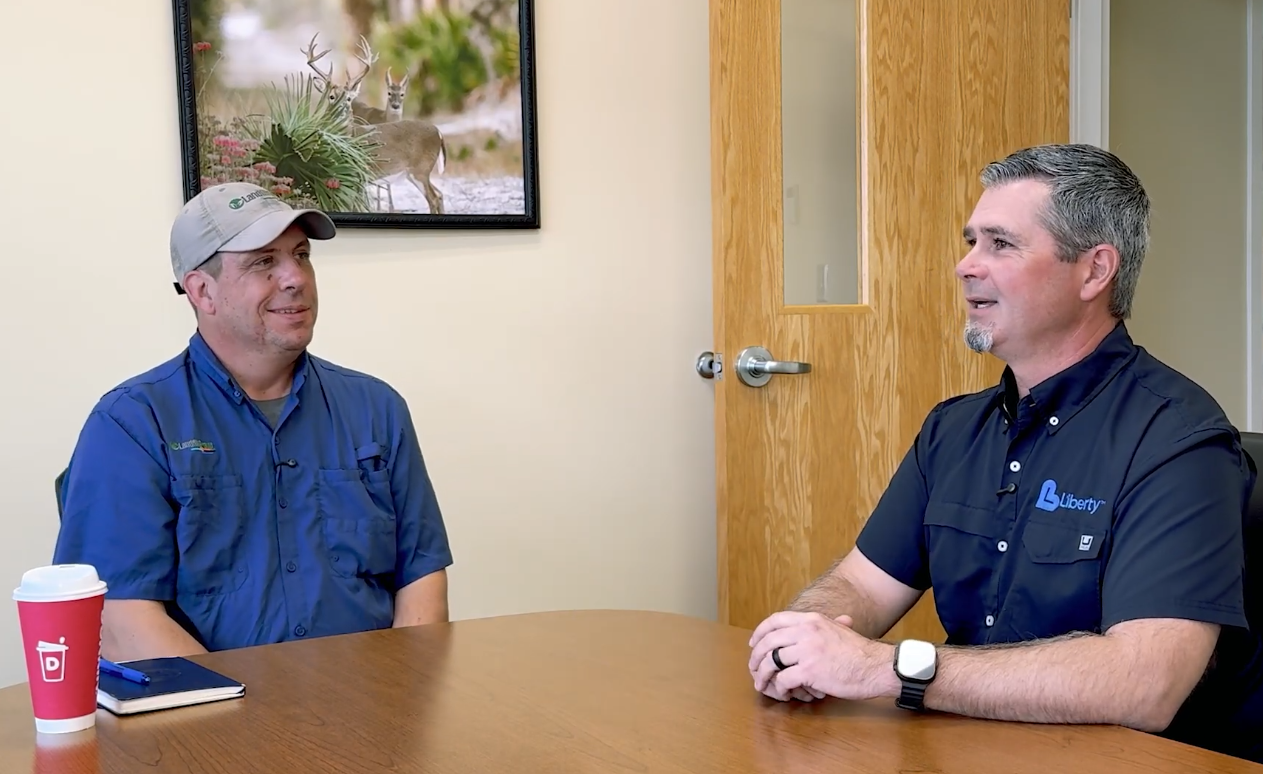
Renewable natural gas (RNG) is helping reshape how utilities think about waste, reliability, and energy supply. In a recent episode of Trash Talk, Liberty’s own Clint Cox, Community Affairs & Strategic Accounts Senior Manager, joined the Landfill Group to talk through the development of a unique RNG project in Columbus, Georgia that turns landfill gas into a local energy resource for customers.
Take a look below for a high-level overview of the podcase episode.
From landfill gas to pipeline-quality energy
The project has been several years in the making and reflects a close partnership between Liberty, the Landfill Group, and the City of Columbus. Together, the teams worked through technical design, regulatory review, and system planning to bring locally sourced renewable natural gas onto the distribution system.
At the center of the project is a simple idea. Capture methane that would otherwise be released from a landfill, clean it, and deliver it into the natural gas system for customer use. The result is a pipeline-quality fuel that meets strict standards and can be used just like traditional natural gas.
Benefits for customers and the community
The project delivers several key benefits:
- Local energy supply: A new source of natural gas produced right in the community
- Improved resilience: Reduced exposure to interstate pipeline variability
- Lower-cost supply impact: Downward pressure on customer rates over time
- Environmental value: Capturing landfill methane and putting it to productive use
- Local economic activity: Supporting construction, operations, and long-term infrastructure investment
Looking ahead
While the path included challenges and adjustments along the way, the project now serves as a working example of how utilities and developers can partner to bring renewable natural gas into the system.
As RNG continues to expand across the industry, the Columbus project shows how collaboration, regulatory alignment, and practical design choices can turn an innovative idea into a real benefit for customers and communities.
Hungry for more? Us too!
Watch the full conversation below or click here to watch it on YouTube.